
Creating a “Statement of Purpose” for your Change of Status to F-1 Application
You have decided to study in the U.S. as an international student, a goal you have always dreamed of. Now, you have taken the steps to create a career plan to make your dream a reality.
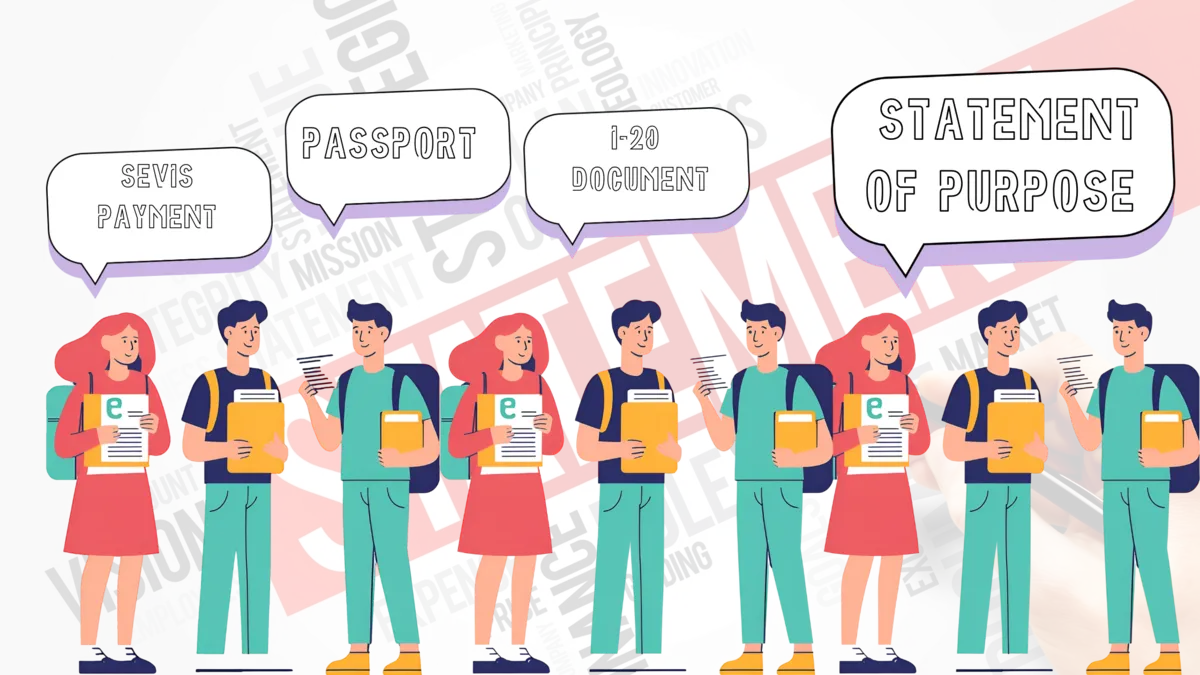
In line with your plan, you have carefully selected accredited schools, compared them, chosen the one that best suits you, enrolled, received the I-20 document, and made the SEVIS payment. Now, you are ready to start preparing your application for your change of status.
As you go through the “to-do" list you have prepared, you may come across an important document for your application – the 'statement of purpose'. The statement of purpose is your opportunity to present a well-prepared, solid case for USCIS officials regarding your goals and aspirations. Therefore, it's essential to prepare it carefully.
Let's get started.
Introduction: Taking Baby Steps to Start
First, take this statement seriously and ensure it looks professional and formal.
- Begin by addressing the UCSCIS on the upper left-hand side of your paper, and on the right-hand side, include the date. The address typically reads:
"U.S. Department of Homeland Security
U. S. Citizenship and Immigration Services
[Specific Service Center Address]"
- Then, state the purpose of the statement as follows:
"RE: Change of Status Application" or
"RE: Change of Status to F-1 Application"
- Next, address the intended recipient using "To Whom It May Concern,” or "Dear Madam or Sir.”
Description: Who are you?
Begin this part by introducing yourself with your name, surname, place of birth, date of birth, country of citizenship, country of residence, current visa status, education level, and your job in your home country (if applicable). Introducing yourself will help the USCIS officers to identify you quickly. So, please write your credentials exactly as they appear on your ID documents, passport, and diplomas.
Explanation: What are your goals and career plans? Why did you choose this school?
In this section, begin by writing about the steps you took on your pathway to enrolling in school. A chronological order will help the reader have a coherent understanding of the events. Why and how did you decide to study in the U.S.? How did you find this school, and what advantages do you believe it has over other schools? How will you benefit from studying at this school?
We can multiply the questions, but it is worth remembering that creating your statement with correct and straightforward answers is essential. While contradictions and unverifiable information might appeal, including them is certainly not recommended, as it will damage your application and credibility.
You can tailor this part to your specific situation. For example, if you are a software engineer, you might emphasize how improving your language skills will open up new opportunities. Or, if you are a young person preparing for university and eager to learn different languages, explain how this will set you on a new career path. Both scenarios are possible, but the important thing is that your goals are clearly and nicely reflected in your statement. You can also include your academic background in your explanations at this stage.
Then, discuss your ties to your home country, such as work and family, and the steps you intend to take as a graduate student. Remember that F-1 status is a non-immigrant status that ends when you graduate, so your plans for the future should be shaped accordingly. It’s also important to mention your intention to return to your home country after completing your studies, as this reinforces the temporary nature of your stay in the U.S.
Conclusion: Conclude the Statement!
It is a good idea to end the statement with a polite conclusion.
You should make your request to the USCIS politely and formally. Include a phone number and an email address where you can be reached if they need additional information or documents. Your email address should be easy to spell, without too many foreign characters that could cause typos, and preferably include your name to ensure you are reachable. Be sure to check your email frequently to respond promptly to any requests.
Here is an example for inspiration:
"I kindly request that you review my application for a change of status. I assure you that I will adhere to all the school and U.S. government regulations and requirements regarding my status change. I also assure you that I will not work illegally at any time, and am committed to maintaining my status as a full-time student. I plan to return to my home country upon completion of my studies.
Thank you for your consideration.
Please feel free to contact me if you require any additional information.
Sincerely"
Lastly, proofread your statement thoroughly for grammar and spelling errors, and have a trusted mentor or an immigration lawyer review it for clarity and effectiveness.
Need Further Assistance?
Each individual's case is unique, and we are here to provide the guidance and support you need. For additional help, feel free to contact us. We are committed to helping you navigate this process with confidence and ease.
This article is for general information only and is not legal advice. Laws and agency practice change; consult an attorney about your specific situation.